What is the difference between full truckload (FTL) and less-than-truckload (LTL) shipments - which one is more suitable for your business?
What is the difference between full truckload (FTL) and less-than-truckload (LTL) shipments - which one is more suitable for your business?
What is the difference between full truckload (FTL) and less-than-truckload (LTL) shipments - which one is more suitable for your business?
What is the difference between full truckload (FTL) and less-than-truckload (LTL) shipments - which one is more suitable for your business?
What is the difference between full truckload (FTL) and less-than-truckload (LTL) shipments - which one is more suitable for your business?
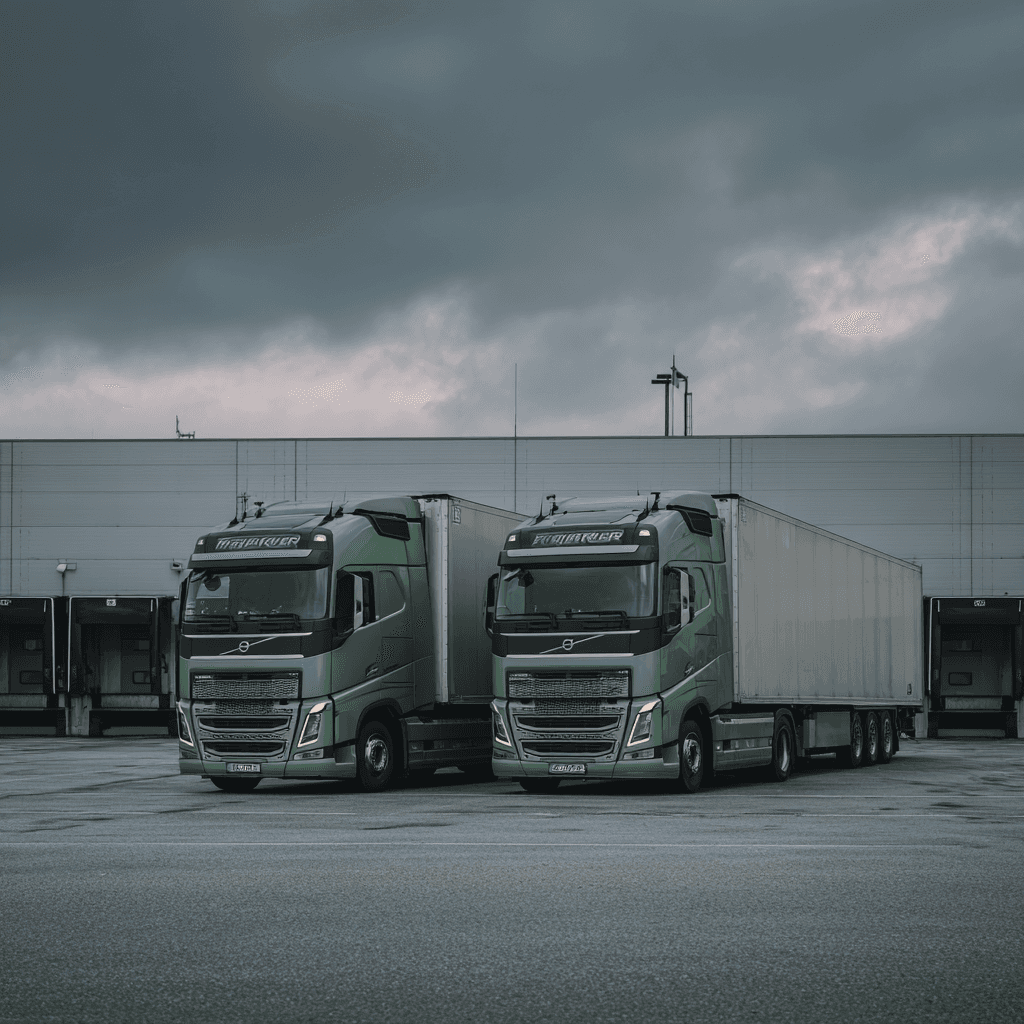
In the world of logistics, commonly encountered terms FTL (Full Truck Load) and LTL (Less Than Truck Load) describe two different methods of cargo transportation.
Although both solutions may appear similar, the differences between them have significant implications for both cost and delivery times.
Understanding which option is most suitable for your business helps optimize transportation costs and plan the supply chain more efficiently.
What is FTL – full load
FTL means that the entire truck is dedicated to one shipment or client.
This is a choice when the cargo:
takes up the entire trailer space or nearly all of it;
is of high value or sensitive;
must be delivered directly from point A to point B without additional stops.
In this case, the transport goes directly – from sender to receiver, without intermediate transshipments.
This saves time and reduces the risk of goods being damaged or mixed up with shipments from other clients.
Advantages of FTL:
faster delivery;
lower risk of damage;
complete flexibility of transportation control;
appropriate for oversized or specialized cargo.
When is it worth choosing FTL:
When you have a large shipment, want to save time, or require maximum security (e.g., when transporting expensive machinery or equipment).
What is LTL – partial load
LTL (less than truckload) means that several clients' cargoes are transported on one vehicle.
This is an economical solution when your cargo does not take up the entire trailer, and the delivery times are not extremely urgent.
Advantages of LTL:
lower cost, as payment is made only for the space occupied;
ability to send smaller cargoes more often;
a more environmentally friendly option, as transport is utilized more efficiently.
Disadvantages:
longer delivery times due to intermediate stops;
higher risk of cargo being transferred or held at a terminal;
less control over the specific delivery time.
When is it worth choosing LTL:
When the cargo is smaller, the delivery time is not critical, and the main goal is to reduce transportation costs.
How to choose the most suitable solution?
The right solution depends on several factors:
Size and weight of the cargo.
If the cargo takes up more than 70–80% of the trailer – it is worth choosing FTL.Deadline.
For urgent orders – FTL.
For more flexible deliveries – LTL.Cost.
LTL is more economical for small quantities, but larger shipments often travel cheaper via FTL.Type of cargo.
Fragile, expensive, or oversized cargoes are usually transported via FTL to avoid additional transshipment.
Masneka Logistics approach
Masneka Logistics offers both FTL and LTL transportation services throughout Europe.
Our team helps evaluate which solution is most rational based on the volume of cargo, delivery deadlines, and budget.
Using modern technology and planning systems, we ensure that every shipment – full or partial – reaches its destination safely, on time, and efficiently.
FTL – the best choice for large, valuable, or urgent cargo.
LTL – an economical solution for smaller quantities when time is not critical.
Both methods have their advantages – the most important thing is to choose the one that meets your business needs.
Masneka Logistics is always ready to help find the optimal balance between cost, time, and reliability.
In the world of logistics, terms such as FTL (Full Truck Load) and LTL (Less Than Truck Load) describe two different methods of freight transportation.
Although both solutions may seem similar, the differences between them are significant for both cost and delivery schedules.
Understanding which option is best suited for your business helps optimize transport costs and plan the supply chain more efficiently.
What is FTL – full load
FTL means that the entire truck is dedicated to one order or customer.
This is a choice when the freight:
takes up the entire trailer space or nearly all of it;
is of high value or sensitive;
must be delivered directly from point A to point B without additional stops.
In this case, the transport goes directly – from the shipper to the receiver, without intermediate transshipments.
This saves time and reduces the risk of goods being damaged or mixed with shipments from other customers.
FTL advantages:
faster delivery;
lower risk of damage;
complete flexibility of transport control;
appropriate for oversized or special purpose cargo.
When to choose FTL:
When you have a large shipment, want to save time, or require maximum security (e.g., when transporting expensive equipment or machinery).
What is LTL – partial load
LTL (less-than-truckload) means that multiple customers' freight is transported in one shipment.
This is a cost-effective solution when your freight does not occupy the entire trailer, and delivery schedules are not particularly urgent.
LTL advantages:
lower cost, as you only pay for the space you occupy;
the possibility to send smaller shipments more frequently;
a more environmentally friendly option, as transport is used more efficiently.
Disadvantages:
longer delivery times due to intermediate stops;
higher risk that the shipment will be transferred or held at a terminal;
less control over the specific delivery time.
When to choose LTL:
When the shipment is smaller, delivery time is not critical, and the main goal is to reduce transport costs.
How to choose the best solution?
The right solution depends on several factors:
Freight size and weight.
If the freight occupies more than 70-80% of the trailer – it's worth choosing FTL.Deadline.
For urgent orders – FTL.
For more flexible deliveries – LTL.Cost.
LTL is more economical for small quantities, but larger freight often travels cheaper by FTL.Type of cargo.
Fragile, valuable, or oversized cargo is most often shipped FTL to avoid additional transloading.
Masneka Logistics' perspective
Masneka Logistics offers both FTL and LTL transportation services throughout Europe.
Our team helps evaluate which solution is most rational based on the volume of freight, delivery deadlines, and budget.
Using modern technology and planning systems, we ensure that every shipment – full or partial – reaches its destination safely, on time, and efficiently.
FTL – the best choice for large, valuable, or urgent shipments.
LTL – a cost-effective solution for smaller amounts when timing is not critical.
Both methods have their advantages – the key is to choose the one that meets your business needs.
Masneka Logistics is always ready to help find the optimal balance between cost, time, and reliability.
In the world of logistics, terms such as FTL (Full Truck Load) and LTL (Less Than Truck Load) describe two different methods of freight transportation.
Although both solutions may seem similar, the differences between them are significant for both cost and delivery schedules.
Understanding which option is best suited for your business helps optimize transport costs and plan the supply chain more efficiently.
What is FTL – full load
FTL means that the entire truck is dedicated to one order or customer.
This is a choice when the freight:
takes up the entire trailer space or nearly all of it;
is of high value or sensitive;
must be delivered directly from point A to point B without additional stops.
In this case, the transport goes directly – from the shipper to the receiver, without intermediate transshipments.
This saves time and reduces the risk of goods being damaged or mixed with shipments from other customers.
FTL advantages:
faster delivery;
lower risk of damage;
complete flexibility of transport control;
appropriate for oversized or special purpose cargo.
When to choose FTL:
When you have a large shipment, want to save time, or require maximum security (e.g., when transporting expensive equipment or machinery).
What is LTL – partial load
LTL (less-than-truckload) means that multiple customers' freight is transported in one shipment.
This is a cost-effective solution when your freight does not occupy the entire trailer, and delivery schedules are not particularly urgent.
LTL advantages:
lower cost, as you only pay for the space you occupy;
the possibility to send smaller shipments more frequently;
a more environmentally friendly option, as transport is used more efficiently.
Disadvantages:
longer delivery times due to intermediate stops;
higher risk that the shipment will be transferred or held at a terminal;
less control over the specific delivery time.
When to choose LTL:
When the shipment is smaller, delivery time is not critical, and the main goal is to reduce transport costs.
How to choose the best solution?
The right solution depends on several factors:
Freight size and weight.
If the freight occupies more than 70-80% of the trailer – it's worth choosing FTL.Deadline.
For urgent orders – FTL.
For more flexible deliveries – LTL.Cost.
LTL is more economical for small quantities, but larger freight often travels cheaper by FTL.Type of cargo.
Fragile, valuable, or oversized cargo is most often shipped FTL to avoid additional transloading.
Masneka Logistics' perspective
Masneka Logistics offers both FTL and LTL transportation services throughout Europe.
Our team helps evaluate which solution is most rational based on the volume of freight, delivery deadlines, and budget.
Using modern technology and planning systems, we ensure that every shipment – full or partial – reaches its destination safely, on time, and efficiently.
FTL – the best choice for large, valuable, or urgent shipments.
LTL – a cost-effective solution for smaller amounts when timing is not critical.
Both methods have their advantages – the key is to choose the one that meets your business needs.
Masneka Logistics is always ready to help find the optimal balance between cost, time, and reliability.
In the world of logistics, terms such as FTL (Full Truck Load) and LTL (Less Than Truck Load) describe two different methods of freight transportation.
Although both solutions may seem similar, the differences between them are significant for both cost and delivery schedules.
Understanding which option is best suited for your business helps optimize transport costs and plan the supply chain more efficiently.
What is FTL – full load
FTL means that the entire truck is dedicated to one order or customer.
This is a choice when the freight:
· takes up the entire trailer space or nearly all of it;
· is of high value or sensitive;
· must be delivered directly from point A to point B without additional stops.
In this case, the transport goes directly – from the shipper to the receiver, without intermediate transshipments.
This saves time and reduces the risk of goods being damaged or mixed with shipments from other customers.
FTL advantages:
· faster delivery;
· lower risk of damage;
· complete flexibility of transport control;
· appropriate for oversized or special purpose cargo.
When to choose FTL:
When you have a large shipment, want to save time, or require maximum security (e.g., when transporting expensive equipment or machinery).
What is LTL – partial load
LTL (less-than-truckload) means that multiple customers' freight is transported in one shipment.
This is a cost-effective solution when your freight does not occupy the entire trailer, and delivery schedules are not particularly urgent.
LTL advantages:
· lower cost, as you only pay for the space you occupy;
· the possibility to send smaller shipments more frequently;
· a more environmentally friendly option, as transport is used more efficiently.
Disadvantages:
· longer delivery times due to intermediate stops;
· higher risk that the shipment will be transferred or held at a terminal;
· less control over the specific delivery time.
When to choose LTL:
When the shipment is smaller, delivery time is not critical, and the main goal is to reduce transport costs.
How to choose the best solution?
The right solution depends on several factors:
1. Freight size and weight.
If the freight occupies more than 70-80% of the trailer – it's worth choosing FTL.
2. Deadline.
For urgent orders – FTL.
For more flexible deliveries – LTL.
3. Cost.
LTL is more economical for small quantities, but larger freight often travels cheaper by FTL.
4. Type of cargo.
Fragile, valuable, or oversized cargo is most often shipped FTL to avoid additional transloading.
Masneka Logistics' perspective
Masneka Logistics offers both FTL and LTL transportation services throughout Europe.
Our team helps evaluate which solution is most rational based on the volume of freight, delivery deadlines, and budget.
Using modern technology and planning systems, we ensure that every shipment – full or partial – reaches its destination safely, on time, and efficiently.
· FTL – the best choice for large, valuable, or urgent shipments.
· LTL – a cost-effective solution for smaller amounts when timing is not critical.
Both methods have their advantages – the key is to choose the one that meets your business needs.
Masneka Logistics is always ready to help find the optimal balance between cost, time, and reliability.
Logistics terms often encountered in the world include FTL (Full Truck Load) and LTL (Less Than Truck Load) which describe two different methods of freight transportation.
Although both solutions may seem similar, the differences between them have significant implications for both cost and delivery times.
Understanding which option is best suited for your business helps optimize transportation costs and plan the supply chain more efficiently.
What is FTL – Full Truckload
FTL means that the entire truck is dedicated to a single order or client.
This is the choice when the freight:
takes up all or nearly all of the trailer space;
is of high value or sensitive;
needs to be delivered straight from point A to point B without additional stops.
In this case, the transport goes directly – from the shipper to the receiver, without intermediate transfers.
This allows for savings in time and reduces the risk of goods being damaged or mixed with shipments from other clients.
Advantages of FTL:
faster delivery;
lower risk of damage;
full flexibility of transport control;
suitable for oversized or specialty cargo.
When to choose FTL:
When you have a large shipment, want to save time, or require maximum security (e.g., when transporting expensive equipment or machinery).
What is LTL – Less Than Truckload
LTL (less than truckload) means that several clients' cargoes are transported in one shipment.
This is a cost-effective solution when your cargo does not occupy the whole trailer and the delivery times are not urgent.
Advantages of LTL:
lower cost, as you only pay for the space occupied;
ability to send smaller shipments more frequently;
more environmentally friendly choice, as transport is used more efficiently.
Disadvantages:
longer delivery times due to intermediate stops;
higher risk that the cargo will be transferred or held at a terminal;
less control over specific delivery times.
When to choose LTL:
When the shipment is smaller, delivery time is not critical, and the main goal is to reduce transportation costs.
How to choose the best solution?
The right solution depends on several factors:
Size and weight of the shipment.
If the cargo takes up more than 70-80% of the trailer – opting for FTL is worthwhile.Deadline.
For urgent orders – FTL.
For flexible deliveries – LTL.Cost.
LTL is more economical for smaller quantities, but larger shipments often travel cheaper via FTL.Type of cargo.
Fragile, valuable, or oversized cargo is usually transported via FTL to avoid additional handling.
Masneka Logistics' approach
Masneka Logistics offers both FTL and LTL transportation services throughout Europe.
Our team helps evaluate which solution is most rational based on cargo volume, delivery deadlines, and budget.
Using modern technology and planning systems, we ensure that every shipment – full or partial – reaches its destination safely, on time, and efficiently.
FTL – the best choice for large, valuable, or urgent shipments.
LTL – a cost-effective solution for smaller quantities when time is not critical.
Both methods have their advantages – the key is to choose the one that meets your business needs.
Masneka Logistics is always ready to help find the optimal balance between cost, time, and reliability.
In the world of logistics, terms such as FTL (Full Truck Load) and LTL (Less Than Truck Load) describe two different methods of freight transportation.
Although both solutions may seem similar, the differences between them are significant for both cost and delivery schedules.
Understanding which option is best suited for your business helps optimize transport costs and plan the supply chain more efficiently.
What is FTL – full load
FTL means that the entire truck is dedicated to one order or customer.
This is a choice when the freight:
· takes up the entire trailer space or nearly all of it;
· is of high value or sensitive;
· must be delivered directly from point A to point B without additional stops.
In this case, the transport goes directly – from the shipper to the receiver, without intermediate transshipments.
This saves time and reduces the risk of goods being damaged or mixed with shipments from other customers.
FTL advantages:
· faster delivery;
· lower risk of damage;
· complete flexibility of transport control;
· appropriate for oversized or special purpose cargo.
When to choose FTL:
When you have a large shipment, want to save time, or require maximum security (e.g., when transporting expensive equipment or machinery).
What is LTL – partial load
LTL (less-than-truckload) means that multiple customers' freight is transported in one shipment.
This is a cost-effective solution when your freight does not occupy the entire trailer, and delivery schedules are not particularly urgent.
LTL advantages:
· lower cost, as you only pay for the space you occupy;
· the possibility to send smaller shipments more frequently;
· a more environmentally friendly option, as transport is used more efficiently.
Disadvantages:
· longer delivery times due to intermediate stops;
· higher risk that the shipment will be transferred or held at a terminal;
· less control over the specific delivery time.
When to choose LTL:
When the shipment is smaller, delivery time is not critical, and the main goal is to reduce transport costs.
How to choose the best solution?
The right solution depends on several factors:
1. Freight size and weight.
If the freight occupies more than 70-80% of the trailer – it's worth choosing FTL.
2. Deadline.
For urgent orders – FTL.
For more flexible deliveries – LTL.
3. Cost.
LTL is more economical for small quantities, but larger freight often travels cheaper by FTL.
4. Type of cargo.
Fragile, valuable, or oversized cargo is most often shipped FTL to avoid additional transloading.
Masneka Logistics' perspective
Masneka Logistics offers both FTL and LTL transportation services throughout Europe.
Our team helps evaluate which solution is most rational based on the volume of freight, delivery deadlines, and budget.
Using modern technology and planning systems, we ensure that every shipment – full or partial – reaches its destination safely, on time, and efficiently.
· FTL – the best choice for large, valuable, or urgent shipments.
· LTL – a cost-effective solution for smaller amounts when timing is not critical.
Both methods have their advantages – the key is to choose the one that meets your business needs.
Masneka Logistics is always ready to help find the optimal balance between cost, time, and reliability.
Contacts
+370 663 99 902 info@masnekalogistics.lt Vyčio Kryžiaus g. 165, Jonučių k., LT-53305 Kaunas. Lithuania
Details
UAB Masneka Logistics Company Code: 307196953 VAT code: LT100018510010
+370 663 99 902
+370 663 99 902
+370 663 99 902
info@masnekalogistics.lt
info@masnekalogistics.lt
info@masnekalogistics.lt
Vyčio Kryžiaus str. 165,
Jonučių village, LT-53305 Kaunas, Lithuania
Vyčio Kryžiaus str. 165,
Jonučių village., LT-53305 Kaunas, Lithuania
Vyčio Kryžiaus St. 165,
Jonučių village, LT-53305 Kaunas district, Lithuania
Details
Details
Details
UAB Masneka Logistics
UAB Masneka Logistics
UAB Masneka Logistics
Company code 307196953
Company code 307196953
Company code 307196953
VAT code LT100018510010
VAT code LT100018510010
VAT code LT100018510010
+370 663 99 902
info@masnekalogistics.lt
Vyčio Kryžiaus g. 165,
Jonučių k., LT-53305 Kaunas, Lithuania
Details
UAB Masneka Logistics
Company code 307196953
VAT code LT100018510010
© 2026 Masneka Logistics. All rights reserved.
© 2026 Masneka Logistics. All rights reserved.
© 2026 Masneka Logistics. All rights reserved.
© 2026 Masneka Logistics. All rights reserved.
© 2026 Masneka Logistics. All rights reserved.